relationships · 9 min read
Most of the Year-by-Year Anniversary Gift List Came From Jewelers in 1937
Paper, silver, gold and diamond are older, but a 1937 jewelers' list filled in most of the anniversary years between them.
By AmpleGuide Editors · Updated October 2026
Most of the year-by-year anniversary gift list you’ll find today came from one trade group, the American National Retail Jewelers Association, which adopted a gift for 24 different years in 1937.
The group’s field secretary, Walter Mellor, had raised the problem at its 1922 convention in Cincinnati. According to The Jewelers’ Circular of September 6, 1922, he said a jeweler “derived very little profit until after he had waited 50 or 75 years for a golden or diamond anniversary.”
The years you probably know best are older, though. The table shows six of them next to the “modern” choice you’ll often see, taken from a list that Chicago Public Library librarians last updated in 2000.
| Year | Traditional | Where it came from | Modern, Chicago list |
|---|---|---|---|
| 1 | Paper | The 1859 Farmer’s Almanac, then Post in 1922 and the jewelers in 1937 | Clocks |
| 5 | Wood | The same almanac; in 1937 the jewelers printed “Wooden (clocks)“ | Silverware |
| 10 | Tin | The same almanac; the jewelers added aluminum in 1937 | Diamond |
| 25 | Silver | The German silver wedding, described in English by 1858 | Sterling silver |
| 50 | Gold | The German golden wedding, described in the same 1858 book | Gold |
| 60 | Diamond | Webster’s dictionary in the 1880s, then the jewelers in 1937 | Diamond |
1. Paper, wood and tin came first
Your first-anniversary paper predates the jewelers by decades. In the 1859 edition of the Old Farmer’s Almanac, which TIME quoted in a 2017 history of the custom, “one year makes a paper wedding” and five years a wooden one. The same almanac gives tin at ten, silver at 25, gold at 50 and diamond at 75.
Your fifth-year wood also shows up as a “wooden wedding” in Webster’s Complete Dictionary of the English Language, published in the 1880s, TIME found.
In 1936 you could still find different first-year gifts on different jewelers’ lists. That June, an editorial in The Jewelers’ Circular-Keystone complained that where one jeweler’s list gave paper for the first anniversary, “another names cotton and a third, nickelware.”
For your 1st, 5th or 10th, the jewelers kept all three old materials in 1937, with two changes. Aluminum joined tin at the 10th, which lets you give either one. The fifth year was printed as “Wooden (clocks),” the one entry on the list with an object in parentheses.
2. Emily Post named eight years
The first edition of Emily Post’s Etiquette, published in 1922, lists eight anniversaries. They are paper at 1, wood at 5, tin at 10, crystal at 15, china at 20, silver at 25, gold at 50 and diamond at 75. Post didn’t expect you to take paper, wood or tin seriously.
“The paper, wooden and tin wedding presents are seldom anything but jokes. Crystal is the earliest that is likely to be taken seriously by the gift-bearers.”
Emily Post, Etiquette, 1922
Crystal and china, the first gifts Post thought you’d take seriously, had their own history. TIME found that a 1910 household reference, The Standard Home Reference Library, gave crystal to the 15th and china to the 20th, and the 1880s Webster’s already had china at 20. Later, a November 1937 editorial in the trade paper praised crystal, china, copper and pottery as picks that “give no chance to accuse the association of trying to monopolize the list.”
If you were marking a 7th or a 40th in 1922, her book had nothing for you.
3. Jewelers voted in 24 years
In May 1936, New York State’s retail jewelers asked the national group for an official list at their convention in Rochester. The national association adopted one at its August 1937 convention in New York, and The Jewelers’ Circular-Keystone printed it in October. Count them up and you’ll find that 7 of the 24 years kept the material Post had given them in 1922, and diamond at 60 matched the 1880s Webster’s.
The other 16 years had no material in Post’s book.
Only linen at the 12th also appears in the 1910 reference that TIME quotes.
Most of those 16 went to household goods you might already own. The list gave cotton to the 2nd, leather to the 3rd, books to the 4th, iron to the 6th, copper, bronze or brass to the 7th and electrical appliances to the 8th. Pottery took the 9th, steel the 11th, silk or linen the 12th, lace the 13th and ivory the 14th.
Electrical appliances at the 8th is the most modern pick on the list, and Evans named it as one of the lines other than jewelry that the list made room for.
4. Gemstones fill the later years
Once you pass your 25th, most years on the 1937 list go to gemstones. Pearl went to the 30th, jade or coral to the 35th, ruby to the 40th, sapphire to the 45th and emerald to the 55th. Post’s book gave you nothing for any of those five years, and you’d wait 30 years for the first gem on the list, a pearl.
Charles T. Evans, the association’s secretary, explained the pricing in the October 1937 issue, where he also predicted that within 25 years the list would earn the respect of the group’s official birthstone list. The expensive gifts, he said, belong on the anniversaries “which are fewer in number and for that reason may be more greatly emphasized.” In other words, he put the costliest suggestions on the anniversaries you’re less likely to reach.
5. Silver and gold came from Germany
You’ll often read that silver and gold anniversaries began in medieval Germany, but TIME’s history found that story hard to back with actual cases. It did find solid evidence by the 18th century, when friends might give a German wife a silver wreath at 25 years of marriage, the silberne Hochzeit, and a gold one at 50.
Anna C. Johnson’s 1858 book Peasant Life in Germany describes silver weddings where the wife wore a silver wreath, the husband a silver buckle, and friends brought gifts. One case she reports involved a husband who had left years earlier to live with another woman. He came home for the 25th, celebrated with his family for a week, and left again.
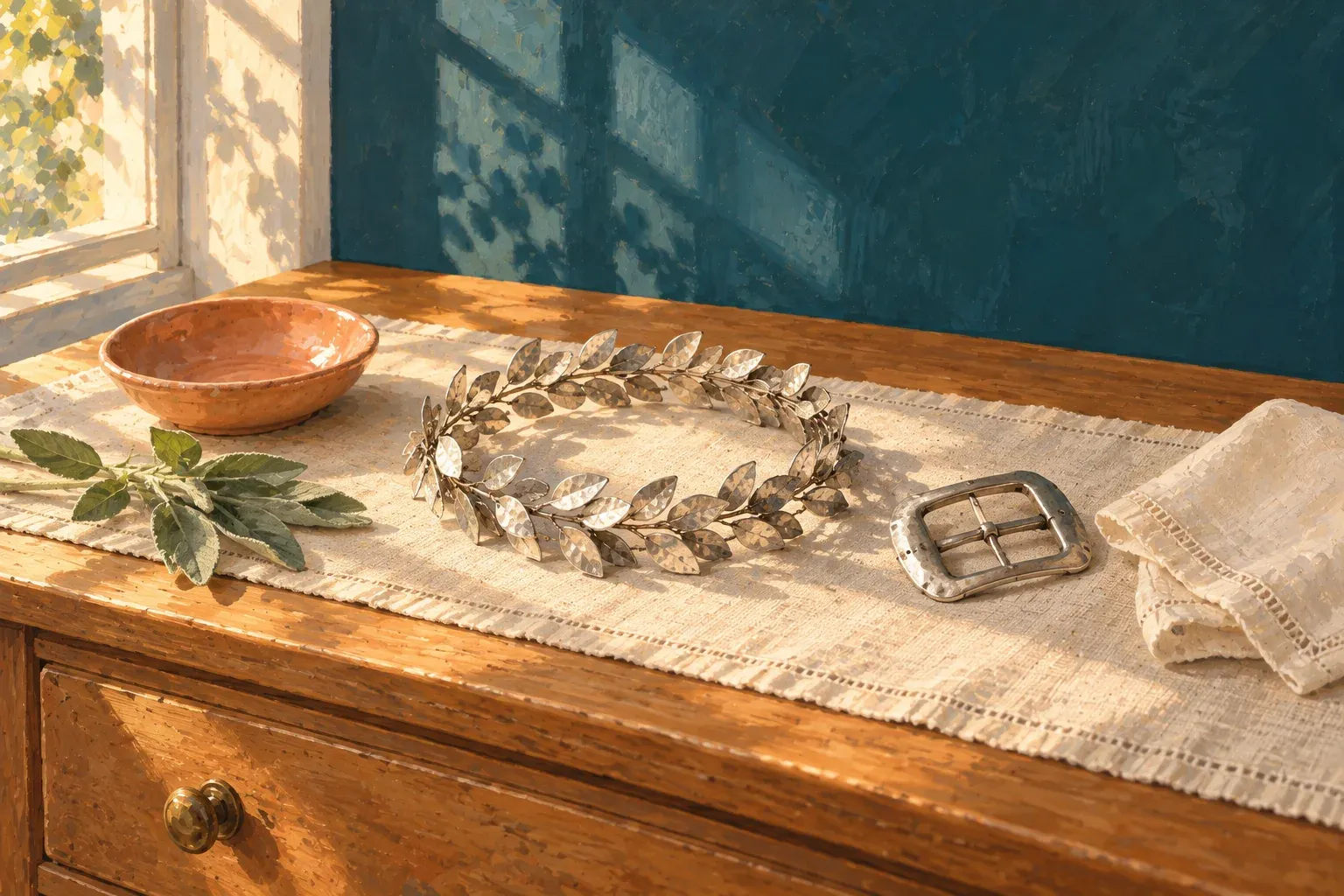
Michael Quinion, the British etymologist behind World Wide Words, says “silver wedding” and “golden wedding” reached English around the middle of the 19th century, through American English from German. When you call a 25th your silver anniversary, you’re borrowing that German phrase.
Post called the golden wedding “a quite sacred event” in 1922. Every list in this article puts your golden anniversary at 50, the wait Mellor was describing.
6. Diamond at 60, or at 75
Diamond sits at two different years, and which one you get depends on the list you open. The 1859 almanac put it at 75 and so did Post in 1922, while Webster’s dictionary put it at 60 in the 1880s, according to TIME.
You may have read that Queen Victoria’s Diamond Jubilee in 1897, for 60 years on the throne, is why the 60th became the diamond anniversary. Quinion, though, will tell you it worked the other way around. The term “diamond jubilee” was invented for that 1897 celebration, he writes, and it borrowed “diamond” from its existing use for a 60th wedding anniversary.
In October 1937, Evans told the trade paper that the 60th, “which it has been in some lists,” would now be the diamond anniversary. He called the 75th “so unusual as to be almost negligible” and left it off. You’ll still find diamond at the 60th on the Chicago Public Library’s list from 2000.
When you hear a 60th called a diamond anniversary, that’s the number the jewelers made official in 1937.
7. The modern column came later
Look up the list today and you’ll usually see a second column. In the version Chicago Public Library librarians last updated in December 2000, the modern column puts clocks at the 1st, silverware at the 5th, diamond at the 10th and sterling silver at the 25th.
Nobody signs that column, so you can’t say who chose clocks for the 1st. The librarians cited a 1985 library journal column, the 1997 World Almanac and the 1997 World Book Encyclopedia. Even the traditional column you’d see there had drifted by then, with bronze replacing electrical appliances at the 8th. If you’re told to give diamond for a 10th, that’s this newer column.
The list also runs past the jewelers’ 60, with land for the 41st, groceries for the 44th and a 10-carat diamond for the 100th.
You’ll find groceries at the 44th, between travel and sapphire.
None of these lists binds you. A handwritten page about your year, covering where you lived, what went wrong and what you’d keep, fits the material that has held your 1st anniversary since at least 1859. The Chicago list gives the 46th anniversary to an original poetry tribute.