home · 8 min read
Spring Cleaning Is Older Than the Vacuum, From Nowruz to Coal Soot
The yearly deep clean has roots in Persian New Year, Passover and coal-heated winters, long before anyone owned a vacuum.
By AmpleGuide Editors · Updated October 2026

On April 19, 1848, Susan Fenimore Cooper noted in her journal that “the great spring house-cleaning” was going on in Cooperstown, New York. She meant the once-a-year, top-to-bottom clean that households did as winter ended.
In Rural Hours, the book her journal became, Cooper ranked the upheaval “second only as regards discomfort, to the troubles of moving.” She added that most sensible people would count house-cleaning and elections “among the necessary evils of life.”
If you’ve ever emptied a closet onto the bedroom floor and regretted it, you know the mood.
The habit was already very old. It has roots in new-year rituals that clear a house before a fresh start, and in the plain mess a winter of fires left behind.
Shaking the house for Nowruz
In Iran, the big clean has a name. Khaneh tekani means “shaking the house,” and families do it in the weeks before Nowruz, the Persian New Year, which begins at the spring equinox on March 20 or 21. In a home that keeps the custom, you take the drapes down, carry the rugs out, repaint the walls and get rid of the year’s clutter.
The festival is far older than any modern border, and it’s kept well beyond Iran, in Afghanistan, across Central Asia and in Kurdish communities. National Geographic traces its roots back about 3,000 years to Zoroastrianism. In 2010, the UN General Assembly named March 21 the International Day of Nowruz.
Since the new year and the new season start on the same day, you clean once for both, and then you set the haft-sin table that greets the year.

Passover and the hunt for crumbs
For Jewish households, the deadline comes from the Book of Exodus. Its 12th chapter sets a 7-day festival of unleavened bread and tells households to “put away leaven out of your houses” on the first day. That leaven, called chametz, covers bread and most foods made from wheat, barley, rye, oats or spelt that have had time to rise.
If you keep Passover, the weeks before it turn into a search of every drawer, coat pocket and car seat.
Even a cracker forgotten in a coat pocket gets hunted down.
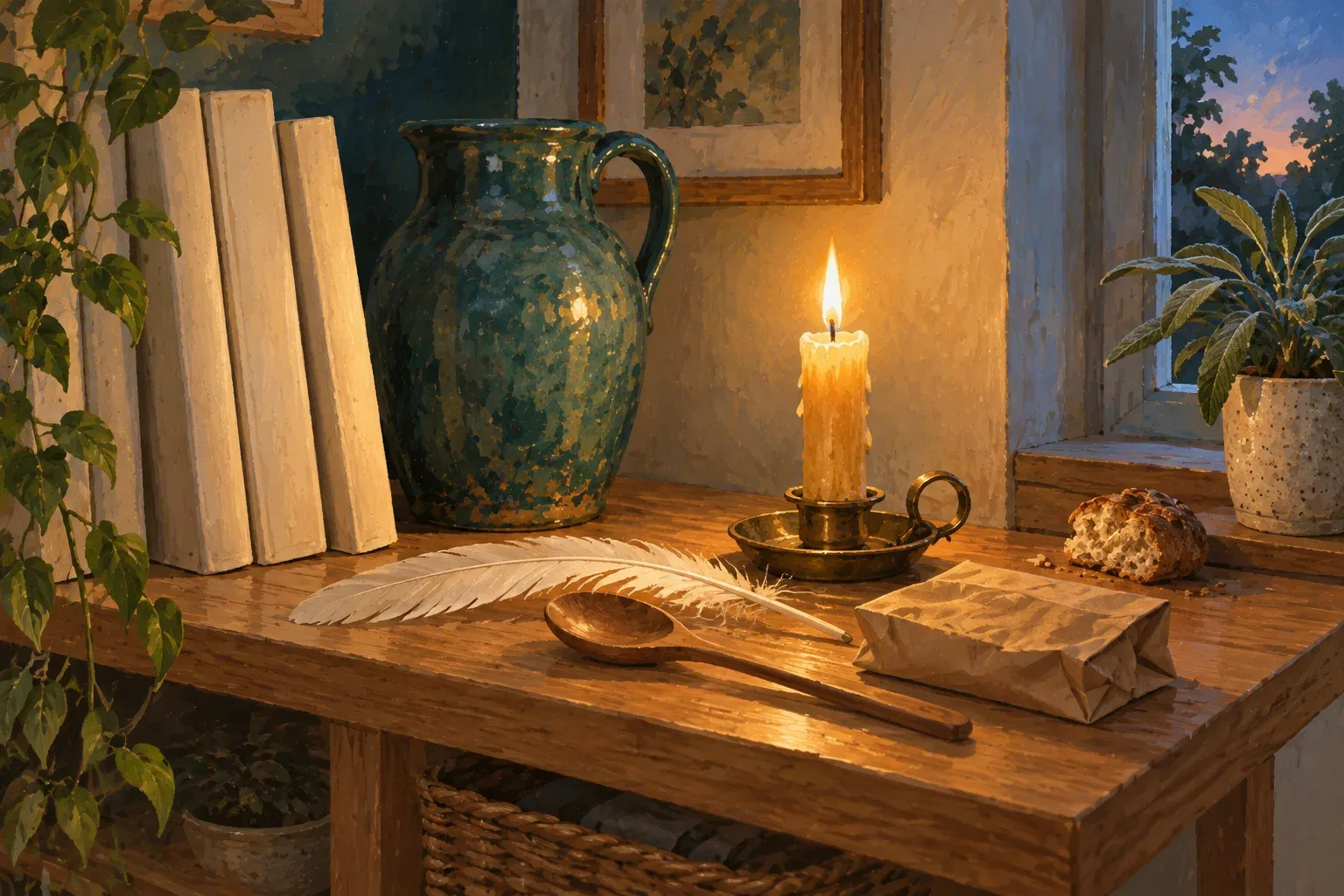
On the night before the holiday, many families walk through the house by candlelight with a feather and a wooden spoon, brushing the last crumbs into a paper bag. The search is called bedikat chametz. The custom is to hide 10 small, wrapped pieces of bread first, so the search always turns something up, and the family burns whatever it finds the next morning.
As cleaning rules go, it’s an unusually clear one. It tells you what to remove, when you have to finish and how to check that you got it all.
Sweeping the dust before Lunar New Year
In China, the big clean comes in late winter, ahead of the Lunar New Year in January or February. It traditionally begins on Little New Year, which falls on the 23rd day of the 12th lunar month in northern China and the 24th in the south. The custom is called sweeping the dust, and the idea is that you sweep out the old year’s bad luck along with the dirt.
The cleaning has to be finished before the new year arrives. By tradition, on New Year’s Day you put the brooms and dustpans away, so the newly arrived good luck can’t be swept out the door.
Coal smoke and shut windows
If you’d lived in a 19th-century house, you’d have had a practical reason to clean in spring. You’d have heated your rooms with coal or wood fires and lit them with oil lamps, candles and, in many cities, gas. Each of those burned something, and through the winter the soot settled on ceilings, walls, curtains and carpets while the windows stayed shut against the cold.
“The spring is the usual period set apart for house-cleaning, and removing all the dust and dirt, which will necessarily, with the best of housewives, accumulate during the winter months, from the smoke of the coal, oil, gas, &c.”
Isabella Beeton, The Book of Household Management, 1861
Beeton’s book spells out the rest of the job. The heavy winter curtains came down and light muslin ones went up, the sweep cleared the chimneys and the household washed or whitewashed the walls. If your house was in a large city, she told you to take the bedroom carpets up twice a year, against once a year in the country.
Spring suited the work for a simple reason. You could finally let the fires go out, open the windows and dry heavy things outdoors, and in Beeton’s view the weather wasn’t yet too hot for scrubbing blankets.
Before the vacuum, carpets went outside
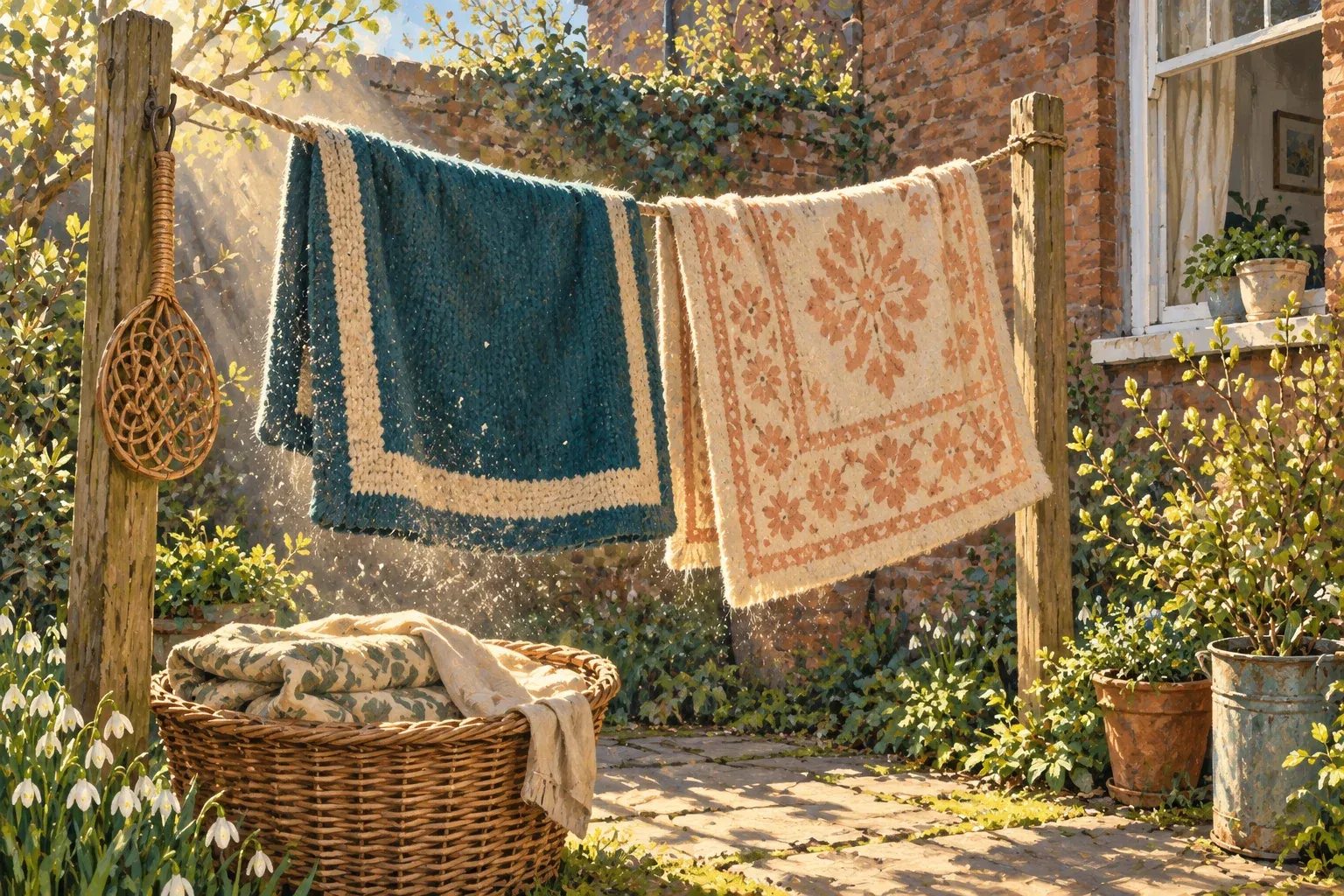
Until the early 1900s, the usual way to deep clean a carpet was to carry it out of the house. You hung it over a clothesline or a railing and hit it with a beater, often a looped paddle of woven rattan, until the dust stopped flying. For everyday sweeping indoors, Beeton suggested you scatter used tea leaves over the carpet first, to hold the dust down and leave a faint smell.
Suction arrives in 1901
In 1901, the British engineer Hubert Cecil Booth patented a machine that pulled the dirt out of carpets with suction. His first version wouldn’t have fit through your front door. A petrol engine on a horse-drawn cart parked outside your house, and long hoses ran in through the windows. The company set up to sell his service was the first to use the words “vacuum cleaner,” in its 1901 prospectus.
By most accounts, portable electric machines followed within the decade, but for years you’d have needed real money to own one. Most histories of the appliance agree that vacuum cleaners became common in middle-class homes only after the Second World War.
Once you could clean a rug where it lay, the yearly trip to the clothesline became optional.
The table below sets the three new-year customs next to the dated records from 1848 on.
| When | Where | What happened |
|---|---|---|
| Weeks before March 20 or 21 | Iran and its neighbors | Khaneh tekani, “shaking the house,” before Nowruz |
| The night before Passover | Jewish homes | A candlelit search for the last crumbs of chametz |
| 23rd or 24th day of the 12th lunar month | China | Sweeping the dust before Lunar New Year |
| April 1848 | Cooperstown, New York | Susan Fenimore Cooper sees carpets hung out of doors |
| 1861 | London | Isabella Beeton blames winter smoke from coal, oil and gas |
| 1901 | London | Hubert Cecil Booth patents a powered vacuum cleaner |
| 2024 | United States | 80% of surveyed adults plan to spring clean |
Most Americans still do it
The last row in that table is the surprise.
If you still do a big spring clean, you’re far from alone, and most of your neighbors probably do it too. The American Cleaning Institute, a trade group for companies that make cleaning products, asked about it in February 2024. In that 2024 survey, which Wakefield Research ran with 1,000 adults, 80% said they planned to spring clean that year, 45% said the job takes at least three days and 22% said it takes at least five.
A cleaning-products group has an interest in that answer, of course, so you should read it as a mood more than a measurement.
Even so, three days is a lot of scrubbing for a home that hasn’t burned coal all winter.
If you’d like one piece of the old ritual without the three days, wait for a dry, breezy morning, open windows on opposite sides of the house and carry one rug outside for a good shake over a railing. In Cooperstown in April 1848, Cooper wrote that “curtains and carpets are seen hanging out of doors.”